2026 Applications Open!
Scotland’s Gardens Scheme Cattanach Bursary
Our next panel meeting will be in September. If you have submitted an application since the last week in July, we will be in touch shortly.
We created the Cattanach Bursary for horticulturists and gardeners in Scotland to access personal and professional development. We recognise that it’s their skills and experience that ensure the continued care of Scotland’s fine gardens. Therefore, we offer a maximum of £1,500 (typical average grant £550) to individual applicants to pursue their learning journey - about plants, best horticultural practices and effective garden management. This bursary was made possible by the generous bequest of Mr Albert Cattanach, a regular visitor to SGS’s open gardens and funds from the John Fife Award. We hope it helps to continue the strong tradition of horticultural training in Scotland.
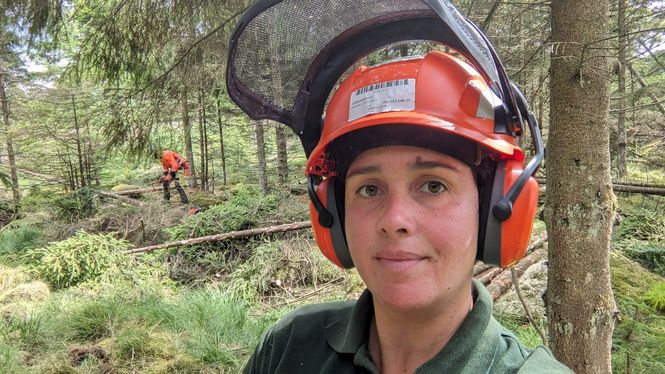
”This training has equipped me with a highly valuable skill that I can now apply in the garden and use to propel my career to a senior position.”
Aline Abreu, Horticulturist, NTS Kellie Castle
Eligibility
Be a horticulturist/gardener aged 16 years and over, living and working in Scotland and/or have a track record of working/training in horticulture in Scotland (full time for a
minimum of two years; part time for a minimum of four years). Main source of income must be through gardening/
horticulture (or about to be, for example, soon to qualify or graduate)Be unable to afford the project without additional support
Commit to providing a report on their bursary, including details of the project and how it benefited them
Successful applicants may re-apply to the fund but should wait three years before their next application.
Please read our guidance notes carefully before submitting your application.
Cattanach Bursary Guidance Notes
Apply today!
Our 2025 success story!
We gave £5,948 in small grants to professional horticulturists in Scotland in 2025.
We’ve helped people train in therapeutic gardening and herbalism; we’ve helped people gain qualifications in chainsaw use and tree climbing; we’ve helped people achieve RHS horticultural qualifications; and supported others to attend symposia on topics like rewilding and gardening in a changing climate.
Previous Cattanach Bursary recipient case studies:
Work Placement at the Japanese Garden at Cowden Report
I currently look after the Japanese collection at Benmore Botanic Gardens. The Japanese glade in Benmore is undergoing considerable changes due to a large-scale larch removal project taking place to curb the spread of the pathogen Phytophthora. This has created opportunities for redesigning the area, which led me to apply for the Cattanach bursary to support a two week work placement in the Japanese Garden at Cowden.
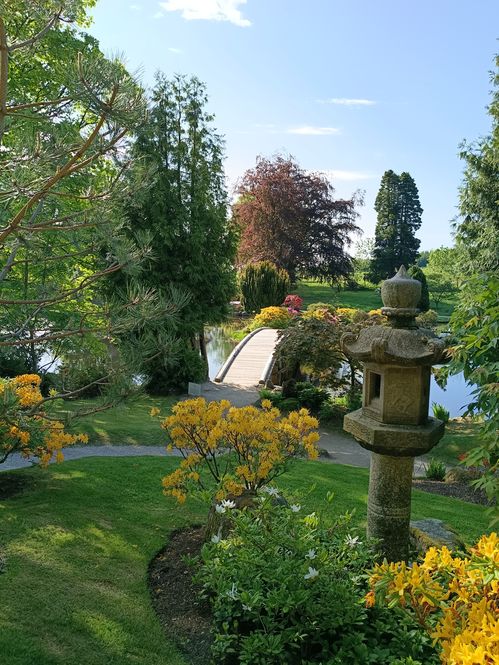
Designed by Taki Handa and built in the early 20th Century, Cowden is one of the most authentic and oldest gardens of its kind in the UK. Recent developments at Cowden have been overseen by Chelsea award winner Professor Masao Fukuhara, and the garden maintains a relationship with a team of Japanese gardeners. I was thrilled to be awarded the funding and get the chance to work in such a prestigious and historic setting.
Elements of Shinto and Zen aesthetics are present throughout Cowden. Although the two religions entered Japan at different times, they have long coexisted and aligned on many principles. Shinto spaces place the emphasis on worshipping the kami - which are gods or deities that represent beings and natural features, for example Mount Fuji. Zen gardens exist to provide the visitor with a quiet place to contemplate and meditate. Japanese design principles favour a restrained colour palette, three at most, with a greater emphasis put on shades of green. As Cowden has an established population of Rhododendron ponticum and R. x lutescens population yellow and purple are dominant in the space.
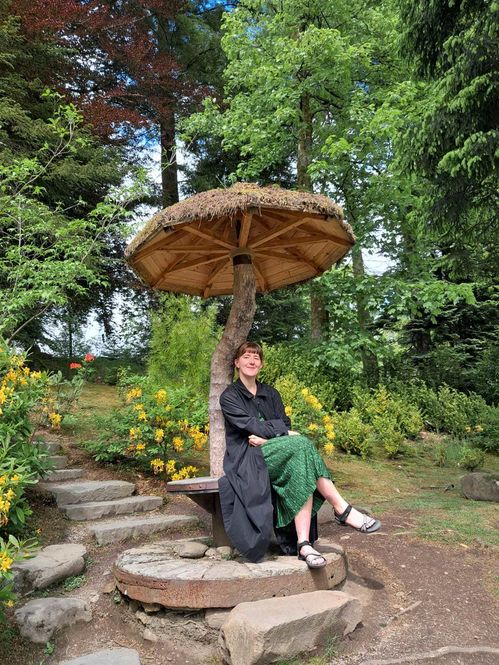
Arriving before the garden opened to the public felt like a real privilege, and I was given permission to wander and take pictures before the visitors arrived. At capacity for the day, the space was soon to be humming with clicks and chatter, but first, there was peace except for the sound of a lawnmower in the distance. I immediately found myself slowing down to attempt to take in the views. It is almost impossible to decide what to photograph, as all 7 acres of the garden seem full to the brim. I sat for a while in the sun house, feeling briefly like a lady of the estate.
Borrowed Scenery - Shakkei
Nestled amongst the Ochil Hills, Cowden has been designed to emulate and blend with its surroundings. This concept is known as Shakkei or borrowed scenery and is achieved through a variety of techniques. The lawns are landscaped like the peaks and valleys in miniature and rocks are used to signify particular mountains. The garden is also designed to seem boundless, winding away into the valley beyond so that the Ochil Hills become part of the composition.
Shakkei can also be used to emulate landscapes that are further afield and in traditional Japanese gardens could feature landscapes from scroll paintings or poetry. At Cowden, a bank has been planted with an abundance of white azaleas at the top to represent the snow of Mount Fuji. Mountains hold a deep spiritual significance in both Shinto and Japanese Buddhism, making them a recurring motif in Japanese garden design. I was struck by the playful nature of many of these choices, and found myself drawn to explore the hills beyond the garden's perimeter.
The Importance of Water
In traditional Japanese gardens, water is of paramount importance. In Japan, water has long been associated with spiritual purification, particularly within Shinto, where numerous kami are connected with water in its many forms. Historically, villages and towns often developed around the careful management of water needed to cultivate wet-rice crops, reflecting the central role water has played in Japanese culture.
The stroll garden (kaiyū-shiki teien) is a traditional Japanese garden style that encourages visitors to wander slowly around a pond or other water feature, experiencing a series of carefully composed views. The pond at Cowden seems to have a gravitational pull, and I could barely take my eyes off it. At every turn, another vista revealed itself, framed by trees, garden structures, or stone lanterns. We spent afternoons rowing across the water, pulling out weeds to preserve the pond's mirror-like reflection, which enhances the surrounding landscape.
Dry Garden - Karesansui
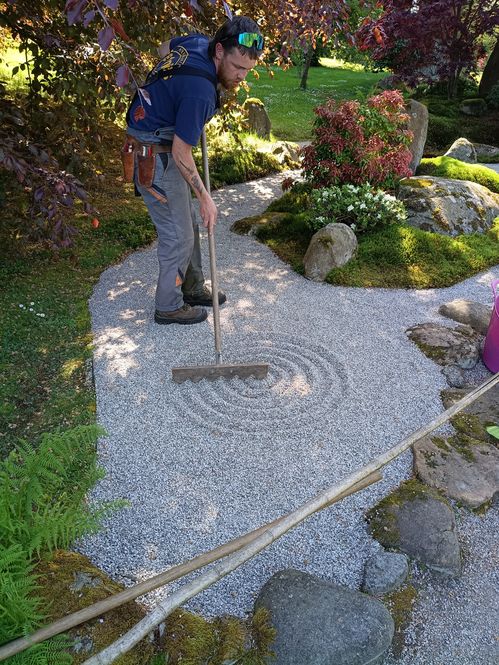
Alongside the extensive use of water, Cowden also features a traditional dry garden (karesansui). Zen dry gardens were originally created within temples as spaces to support meditation and contemplation. They use pebbles or sand to represent water and landscapes. Whenever the gravel was disturbed, we were required to sweep it flat again, and use a specially designed rake to create concentric rings to emulate the ripples made in water (see photo). During my visit the neighbouring beech tree was shedding its flowers, and I was tasked with removing them from the gravel. I found the repetition in this task surprisingly peaceful, which gave me a greater appreciation for the calm that these gardens are designed to inspire. Situated in the dry garden were several mossy islands containing stones said to represent members of the garden owner and her family.
Significance of Stones
Stones are one of the most important elements of the Japanese garden, which I found interesting coming from working in a botanical garden where plants naturally dominate. In Japanese gardens stones can symbolise mountains, islands, animals, kami and many other natural forms, with their meaning shaped by careful placement and the viewer's imagination. I was advised repeatedly by Cowden’s team that the viewer's perception is as valuable as the designer's intention, and that there is no correct way to perceive a stone, or any element of the garden. I found this creative approach appealing.
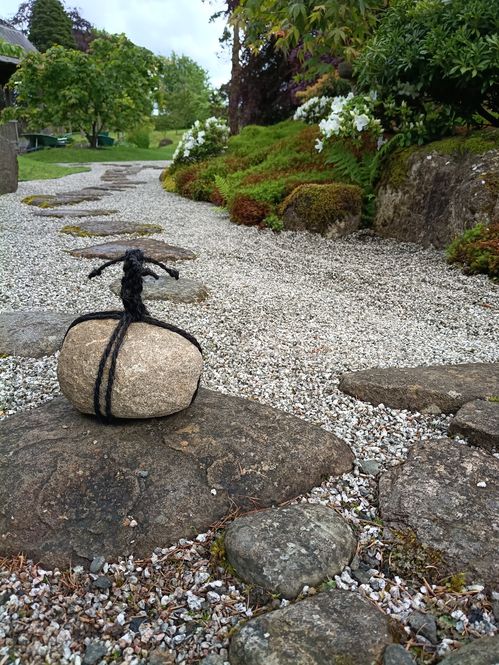
Cowden features a ‘welcome stone’ by its entrance with a wide fold in it to meet visitors in an embrace. There are stones representing traditional Japanese symbols of longevity and good fortune including cranes, koi and turtles. We even created guard stones or tomo ishi (see photo), made with stones left-over from a drystone walling project and embellished with black thread to advise people to go no further. This reflects the Japanese principle of mitate, which encourages reinterpretation and finding new meaning in existing materials and objects. I was also impressed by lanterns built around Cowden from stones found in the pond and surrounding areas.
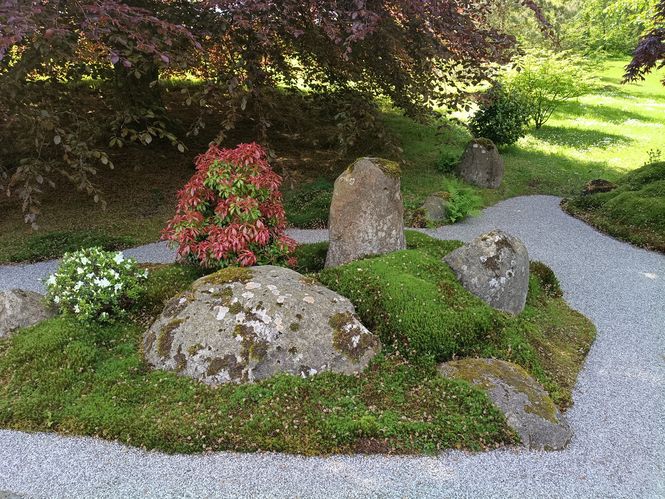
I was once again struck by the playfulness woven into the garden’s design, expecting to have to stretch the imagination to interpret its stones. I couldn’t help but smile when I identified the rather relaxed looking turtle represented in the dry garden (see above).
Niwaki Pruning
I was given the chance to try Niwaki, the Japanese practice of training and pruning garden trees, at Cowden. Frazer, not long back from Japan demonstrated the principles behind this approach. Many factors were taken into account during pruning; the tree being pruned must remain in proportion with the surrounding landscape and architecture, in this case the Tea House and entrance gate.
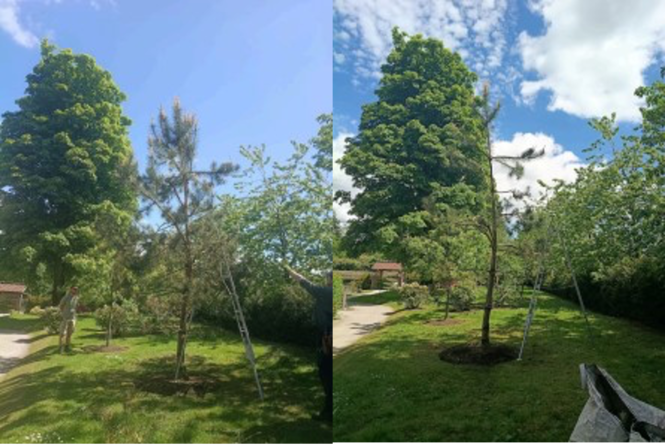
The apical buds were carefully reduced to encourage a more compact form and the side shoots to grow. Needles were removed in order to increase air flow, light and vigour. We initially hesitated and what appeared to be a form of radical butchery, concerned that the Scottish climate might not be as forgiving as the conditions in which these techniques were traditionally developed. However, we continued carefully through the pine, branch by branch, until the transformation was complete (see above for before and after). The process challenged my perception of pruning, as what initially appeared to be severe intervention revealed itself as a thoughtful method of guiding the tree’s future growth and relationship with its surroundings.
Structures and Woodwork
A quick note on the carpentry at Cowden. All of the fences and benches were designed and built in Japanese joinery techniques - which have complex interlocking wooden joints rather than fasteners such as nails or screws. This is in order to allow structures to flex naturally during movement and changes in humidity, contributing both to durability and elegance of finished woodwork.
Conclusion
My time at Cowden significantly changed the way I perceive stones, the relationship between a garden and its surrounding landscape, and the importance and beauty of water features. Since my placement, I have found myself looking beyond trees and stones as physical objects, instead considering what they might symbolise or represent within a garden. I was excited to notice the resemblance between the azaleas in the below photo and the clouds behind them on a recent trip to Baravalla.
During my placement I walked the local area in my free time, and was delighted to find the tourist attraction the ‘Bull Stone’ situated a short walk from my accommodation. Although it is speculated this was used for bull baiting, not spiritual worship, I enjoy imagining that it carries some bullish energy. This has inspired me to research traditional Scottish stonework and its spiritual interpretations.
I was also inspired by the gardeners' commitment to maintaining the garden as authentically as possible, despite the challenges of applying traditional Japanese horticultural techniques within a Scottish climate.
Since my time at Cowden, I have been drawn to look at the scenery surrounding Benmore in order to find inspiration for how to relandscape spaces in the Japanese glade. I have hopes to recreate the iconic Kyles of Bute landscape, along with the Massan falls in miniature in the glade, and have begun creating a small-scale snow tipped Mount Fuji planted with Galanthus and Prunus species.
I have been profoundly inspired by the experiences I had at Cowden and remain incredibly grateful for the opportunity to work there. I hope to return there in the future. The placement has also transformed the way I approach weeding—not as a chore, but as an opportunity for mindfulness and contemplation—and for this shift in perspective, I am most grateful.
Erica Randall
Scotland’s Gardens Scheme Cattanach Bursary Holder
Garden History Diploma
The garden history diploma is a two-year online course that commenced in September 2025. This started with a three day in-person induction giving me the opportunity to meet fellow learners and an insight into the various organisations that we can utilise for our research. This included a guided tour of the Royal Botanic Garden Edinburgh (RBGE) library and herbarium, a potted history and a tour of the Edinburgh garden looking at site changes using historic maps. Talks were given on correct plant nomenclature, the differences between primary and secondary source information, and the Modern Humanities Research Association (MHRA) style guide for referencing. We also visited the map library through the National Library of Scotland and the archives at Historic and Environment Scotland.
Online Studies
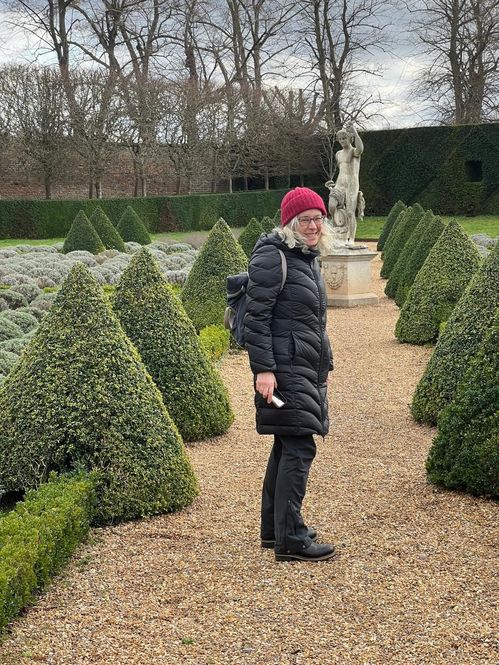
I have successfully completed Unit 1 covering the history of garden design from Ancient Egypt, Mesopotamia and Roman times right through to the modern 21st century. As a result of these studies, I was inspired to visit Fulham Palace, Ham House and Hampton Court Palace (examples of 16th and 17th century gardens) to consolidate my learning. It has also increased my enjoyment by viewing the gardens with a more informed eye.
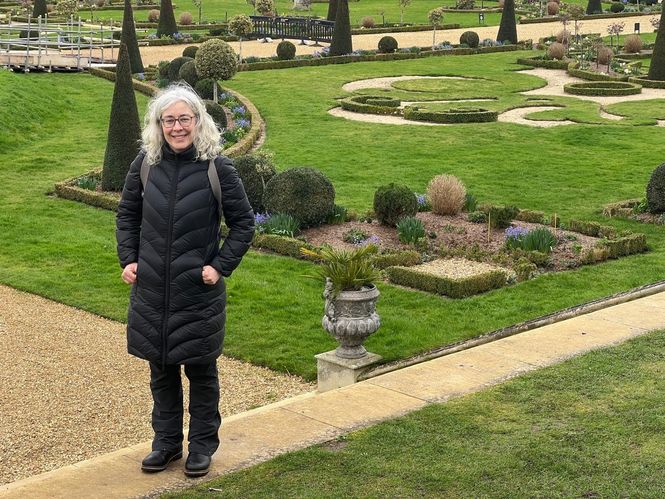
The course activities have delved into the Classics and Greek mythology, opening my eyes to a whole new world. The forum posts also allow opportunity to explore plant introductions, plant uses during a particular period or style, all while practising the MHRA referencing in preparation for our first assignment.
Currently we are examining the influence of Italian garden design on British landscapes. This is of great interest having been fortunate to visit some of the gardens discussed.
Assignment
Our first assignment is to produce a Historic Garden Report of our choice, due in September 2026. My preliminary thoughts are to investigate the changes at Archerfield and Dirleton Estate having worked there myself and recently discovering articles and books written by a previous Head Gardener, David Thomson (1823-1909). I am curious to learn more as during my time working at Archerfield the team knew little about the garden’s past. It appears that the design plans and the estate papers have been lost, but I hope to uncover more with further investigation.
Outcomes
I have learned a great deal in a short time. Not just about landscapes, but mythology, general history and events that have influenced cultures and attitudes to garden design. It has also steered me into the fascinating world of archives and developing research skills. And of course, a greater appreciation for the gardens that I visit.
Evelyn Whiting
Scotland’s Gardens Scheme Cattanach Bursary Holder
Thrive Award in Social & Therapeutic Horticulture
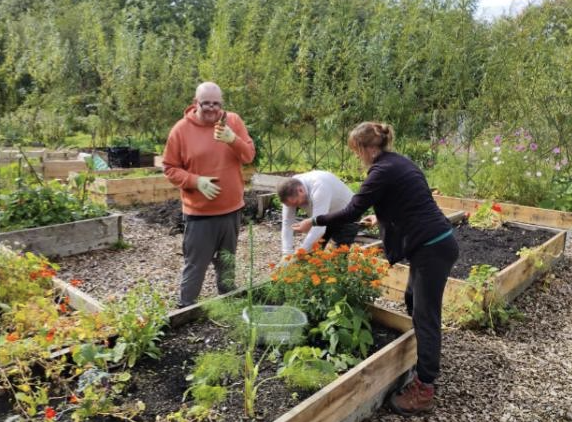
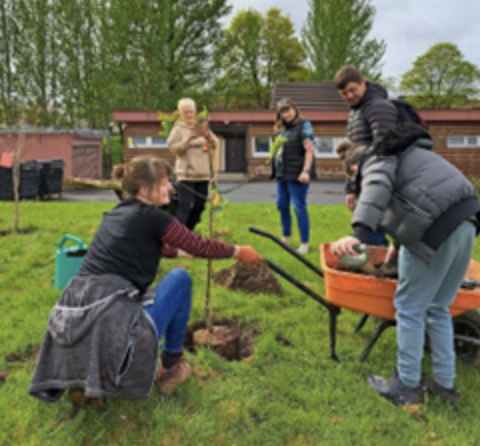
“I’ve been working in therapeutic horticulture now for three years for Urban Roots, first as a Therapeutic Gardener and now also as a Garden Project Coordinator. Although there is a lot of evidence that gardening is extremely beneficial for our mental health and wellbeing it is still not that widely recognised as an intervention or therapy for the general population.

As part of my role at Urban Roots I run a Gardening for Wellbeing group every Tuesday which takes referrals from local GPs, OTs, charities that support adults with additional needs and mental health organisations. The group currently has 12 participants and they all feedback to us how important being in the garden is for their wellbeing.
I also run groups with the Simon Community, GAMH and organisations like the Glasgow Disability Alliance as well as local schools and nurseries. We are just about to start a new gardening group at the local care home for adults with dementia, funded by the local GP practice and interested in doing more of this type of outreach work.
To improve my practice I had heard about the gardening charity Thrive’s course in Social & Therapeutic Horticulture and thought it sounded like the next step for my career in horticulture as currently in Scotland there aren’t any other qualifications like this. I couldn’t afford to pay for it myself and was extremely happy to receive the Cattanach Bursary to help with the majority of the fees - Urban Roots helped out with the rest!
It started off with a 2 week series of lectures and tutorials about a whole range of topics such as the benefits of therapeutic gardening, models of practice, how to develop sessions, aims and outcomes and task analysis. It was a great opportunity to meet other practitioners from the UK and further afield. Once this part had been completed I went on to the actual award itself which was a series of more lectures and activities to deepen understanding. I found this section really important for designing feedback sessions and measuring outcomes which is particularly useful for writing funding applications.
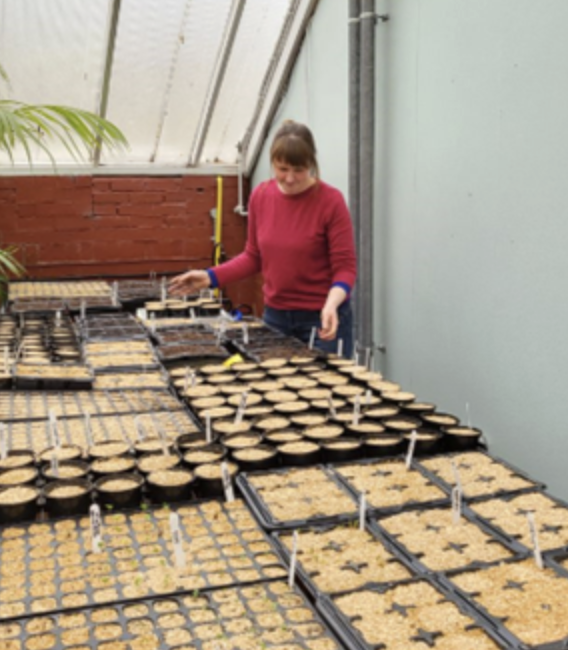
The last part of the Award was an assignment where we had to design a STH intervention programme for a specific client group that was relevant to their needs. We had to design a programme of activities across the year thinking of any adaptations required and how these met chosen outcomes. We then had to discuss methods of assessment and appropriate outcome evaluation tools. I chose gardening with adults with late onset dementia as my client group as I was at that time in conversation with the local GP practice about getting funding to do an outreach gardening group in the local care home.
I had access to a tutor to discuss my assignment which was really helpful to get regular meetings when I was going a bit off track! I submitted my assignment last week and felt it was so helpful at a time when I was actually designing a programme for that client group in real time. It helped me shape my project plan and deliver the proposal to the GP practice and care home - we are due to start the group in a few weeks time and have funding until the end of August.
So a huge thank you from me to the Cattanach Bursary and the staff from the Scotland’s Garden Scheme who checked in with me from time to time to see how I was progressing. I really feel I have gained a lot of confidence in my practice as a Therapeutic Horticulture Practitioner and how I speak to other organisations about what we do at Urban Roots. I would recommend the course to anyone who wants to gain more skills and understanding of how best to design a garden and a programme of activities for a specific client group. I feel it will also be really helpful for writing my funding applications in the future and working in partnership with other organisations. Gardening has always been a source of joy and comfort for my own mental health and it’s great to get support from outside horticultural bodies who appreciate how great gardening is for us all.“
Tom McFadyen
Scotland’s Gardens Scheme Cattanach Bursary Holder
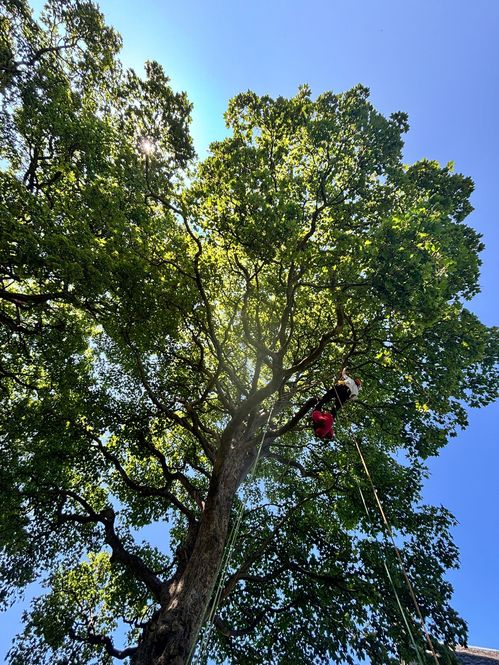
Tom McFadyen attended a 6-day tree climbing with rope access and aerial rescue Level 2 in June 2025, receiving funding from Scotland’s Gardens Scheme Cattanach Bursary to pay for half of the fees.
“I attended a 6-day Tree climbing with rope access and aerial rescue Level 2 in June 2025 with Treevolution in Winchburgh. I was very pleased to have received funding from Scotland's Gardens scheme Cattanach Bursary to pay for half of the fees.
The course was absolutely brilliant, and I really had to step out of my comfort zone. The training and certificate now qualifies me to access trees safely to check the health status and wildlife function of trees in both gardens and the wider landscape. It is a different world up in the crown of a tree and you really learn to trust the equipment as well as your own body!
I look forward to using this certificate to pursue my professional interests in Horticulture, arboriculture and ecology. Checking trees for bat roosts and birds' nests will be of further interest to me. My place of work was not able to fund this training course so I am very grateful to the volunteers and fund raisers at Scotland's Gardens Scheme who made this possible.
This course was hands down the most challenging and life affirming thing I have done for a very long time. I would recommend it too anyone looking for a challenge. I'm very happy with these new skills I have gained and look forward to using them throughout my career.”
Fi Halliday
Scotland’s Gardens Scheme Cattanach Bursary Holder
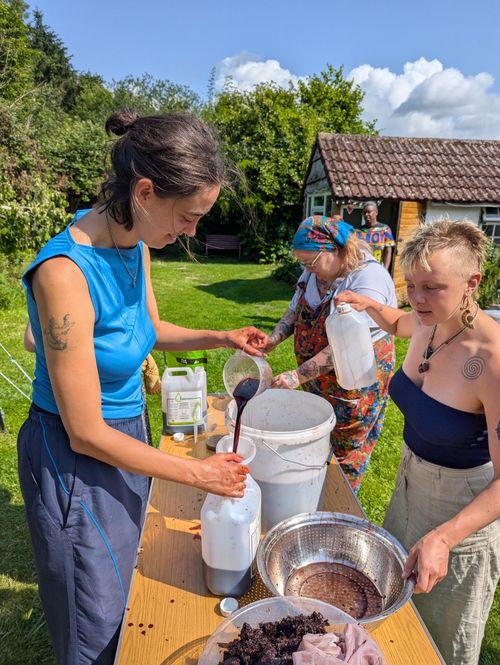
The Cattanach Bursary enabled bursary-holder Fi Halliday to attend an intensive plant medicine making course run by the Solidarity Apothecary in Somerset in June 2025.
“The three day course was attended by 22 people and consisted of both theoretical and practical learning about herbal medicines that can support people experiencing traumatic stress.
Throughout the weekend, I learned how to make herbal cough syrup, muscle balm, throat lozenges, lavender oil (for sleep support), glycerites and tinctures. As a group we made over 200 medicines that will be taken to the refugee camp in Calais to support people living there.
It was important for me to attend this course in order to further my skills in a variety of horticultural areas: namely plant identification, herb care and harvesting, herbal preparation methods and correct storage of herbs. Attending this course provided me with invaluable skills in all of these areas that I intend to apply in my current role as a community gardener in Glasgow.”