
Air layering Japanese maples
Les shares his tips of how to increase acers in your garden through the process of air layering. Read on to discover his recommended techniques…

This article is not a ‘how to’, but rather an illustration of how straightforward it can be to increase your stock of acers by the process of air layering, and encourage you to give it a go. There are many videos available that show the process, so I won’t go into that here, but will talk about when to layer and what to do with the branch once the layer has rooted.
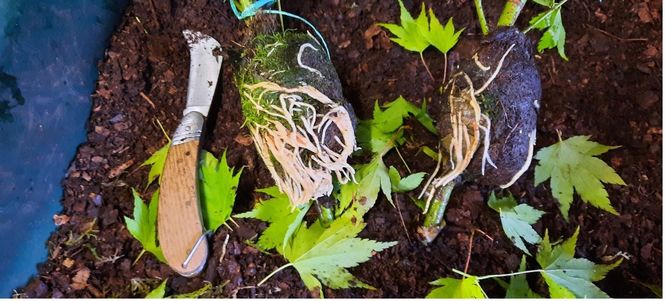
Many of the best videos are by bonsai specialists and they sometimes layer large branches up to 10ft or more. My experience is that thicker branches will take better than those that are thin, and become larger plants more quickly, but whereas the bonsai growers don’t mind removing large branches from their stock plants, most of us would prefer lighter pruning that keeps the shape of the acer, so the selection of thinner branches is usually the only option.
What to layer and when
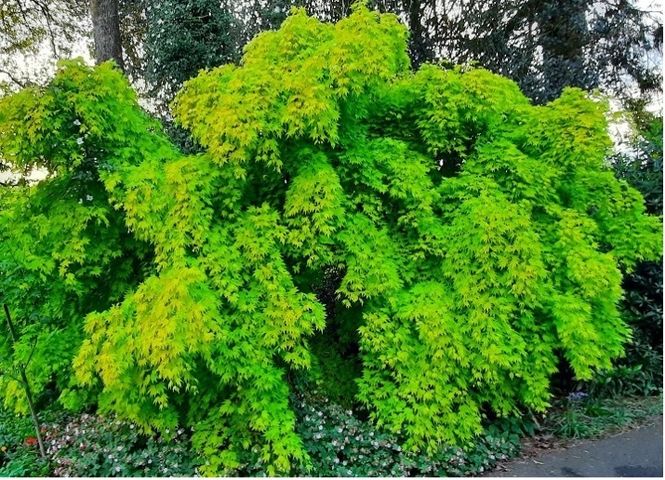
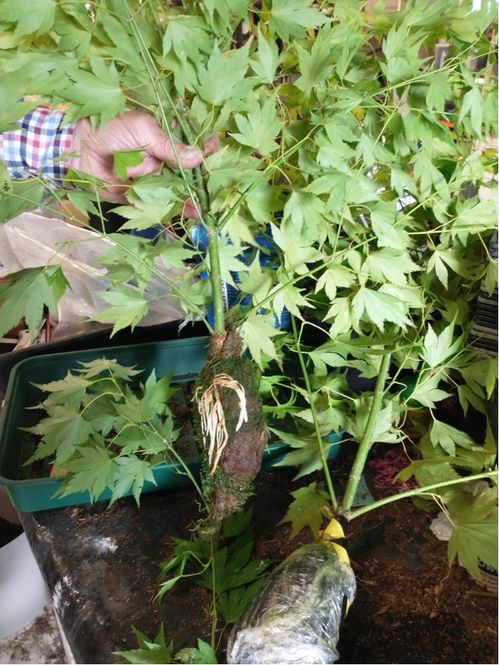
I have a couple of Orange Dream acers that have grown together to over twelve feet, and taken up more space than I expected, hanging over the drive, and needed pruning. I took 15 layers from these, with branches about two to four feet in length, the stems being about 3/8 inch to 1 inch in diameter. These were taken in early May and were cut from the tree on 3rd September, about 14 weeks after layering. The specialists show layers cut from the tree after about 6-10 weeks, but how long roots take to develop will depend on the vigour of the variety and the growing conditions. My layers were covered in clear plastic, so I could judge how well developed the roots were before severing the branch, and it was 12- 14 weeks for me. It’s important that the layers are taken early in the season so that the cut branch will continue to develop roots before the colder weather of autumn brings an end to growth. The most popular rooting medium is sphagnum moss, and while Heron Bonsai complained about the cost of buying it, I just scraped a bucket full from one of my dry stane dykes where it grows in abundance. Some videos show a layer of aluminium foil or black plastic covering the layer – I tried this and it didn’t seem to make much difference, but the science suggests that roots grow better in the absence of light.
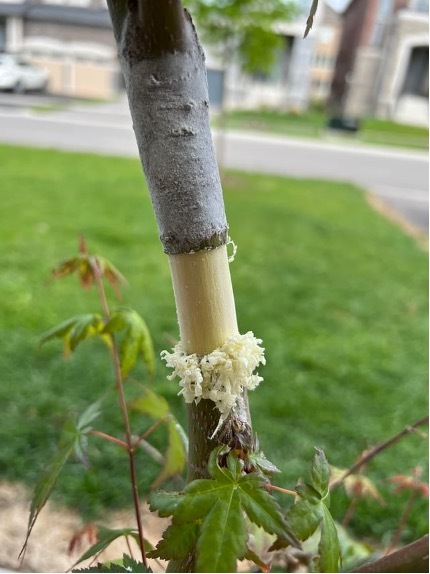
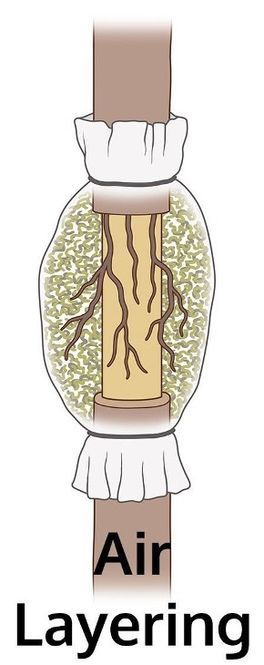
The roots form above the section where the bark and cambium layer has been removed.
What to do with the rooted layer
Once the rooted layer has been cut from the tree, it’s important to remove about half the leaves as the immature roots can’t support a leafy canopy. The bonsai guys usually cut the branches quite severely, as they want a small new tree, but I want to grow the acer in the garden and keep the shape, so I cut most of the leaves off instead, leaving the thin branches to form the shape of the shrub the following year.
I had to decide what medium to pot the rooted layers into, and found that Heron Bonsai wrapped the roots in more moss, put in a pot and placed it into a tray with an inch of water. I tried this and was rewarded within a couple of weeks with thick white roots coming out of the bottom of the containers. It’s important to support the branch to stop it moving about and breaking the new roots, so I cut some holes in the top of the pot and looped wire around the stem.
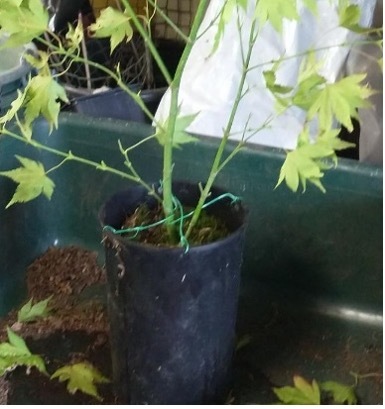
I also used clematis pots as the root mass tends to be long rather than wide. I cut off the remains of the old stem. Keep the new plant well watered, out of wind and sunshine.
By mid October the leaves were dropping, and I had to decide on the potting medium for overwintering and next year’s growth. Some of the bonsai specialists remove as much of the moss as they can from the roots before potting into an inert medium such and gravel or lava rocks. Perhaps fine for bonsai, but not for a garden plant. I tried several methods for my 15 layers: leave most of the moss on and pot into my usual compost, or leave some of the moss on and pot into compost. The roots are very delicate and would break easily, so after a couple of attempts, most were left with moss around the roots. Again, I crisscrossed wire around the base of the stem to support the long branches.
It’s now late February, and most of the layer stems from last year are still green, with some die back from the tips, but this is common for acers. Two of the small ones have about 60% dieback, but hopefully will survive. As with rooted cuttings, survival through the first winter is the challenge – protect from frost and especially wind.
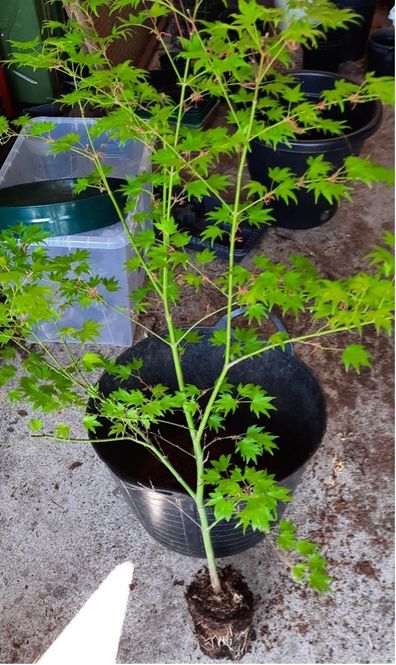
Acers are expensive to buy, and can be slow growing, so creating new plants that are garden ready the following year and maybe four feet or more in height is straightforward and enjoyable. Many trees and shrubs will air layer successfully, so give it a go.
Other suitable plants for air layering include: acers, Camellia, Chaenomeles, Daphnes, Ficus, Forsythia, Hamamelis, jasmine, Philodendron, rhododendron and azalea, lilac and viburnums and deciduous trees such as birch, maple and most fruit trees.
Suggested videos
Heron Bonsai
https://www.youtube.com/watch?v=8FO6-6Ntttc&t=1342s
https://www.youtube.com/watch?v=gniwkvKUpDg
With our many thanks to Les for sharing his expertise. Read more from Les here:
Top Tips for Trailing Geraniums